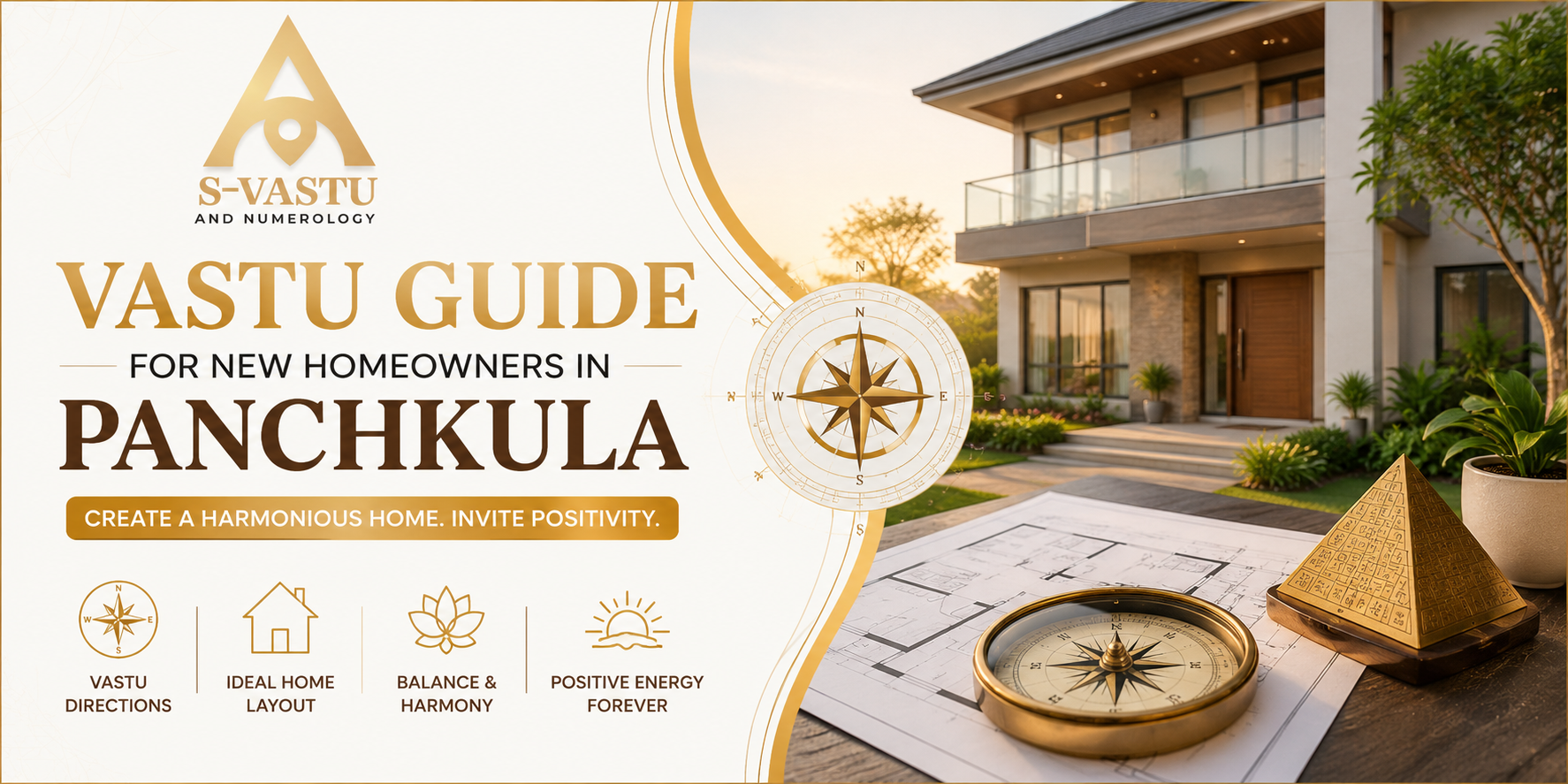
Buying or building a new home is an exciting milestone. Along with choosing the right location, layout, interiors, and amenities, many homeowners also consider Vastu Shastra when planning their living space. Vastu can help create a home environment that feels balanced, comfortable, and harmonious for the people living in it.
For new homeowners in Panchkula, applying Vastu principles at the planning or early construction stage can be easier than making structural changes later. From selecting the right entrance direction to positioning the kitchen, bedrooms, temple, and staircase, thoughtful planning can make a significant difference to the overall layout of your home.
In this guide, we will discuss some practical Vastu tips for a new home in Panchkula.
What Is Vastu Shastra?
Vastu Shastra is a traditional Indian architectural system that focuses on the relationship between a building, its occupants, and the surrounding environment. It considers directions, natural elements, spatial arrangements, entrances, and the placement of different rooms.
The main directions—North, South, East, and West—along with the four diagonal directions, are important in Vastu planning. The objective is to create a well-balanced space where rooms and activities are appropriately positioned.
While Vastu should not replace structural engineering, building regulations, or practical architectural planning, it can be considered as an additional planning principle for homeowners who value traditional design practices.
1. Pay Attention to the Main Entrance
The main entrance is one of the most important areas considered in Vastu. It is traditionally viewed as the primary point through which energy and opportunities enter the home.
When planning a new home, consider:
Keeping the entrance clean, well-lit, and clutter-free.
Avoiding unnecessary obstacles directly in front of the main door.
Choosing the entrance location based on the home's overall layout and direction.
Keeping the doorway proportional to the size of the house.
Maintaining a welcoming and attractive entrance area.
A Vastu Consultant in Panchkula can assess the exact entrance placement based on the property's direction and floor plan.
2. Choose the Right Location for the Living Room
The living room is where family members spend time together and where guests are usually welcomed. According to traditional Vastu principles, the living room can be planned in the North, East, or North-East areas depending on the overall layout.
Keep the living area:
Spacious and naturally ventilated.
Well-lit during the daytime.
Free from excessive clutter.
Arranged to allow comfortable movement.
Balanced with suitable furniture placement.
Avoid filling the room with unnecessarily heavy furniture, particularly in areas that should remain open and accessible.
3. Plan the Kitchen Carefully
The kitchen represents the fire element and is therefore given special importance in Vastu Shastra.
The South-East direction is traditionally considered suitable for the kitchen because it is associated with the fire element. The North-West may also be considered as an alternative depending on the property's layout.
Some practical Vastu suggestions include:
Place the cooking area preferably in the South-East.
Keep the stove and sink separated rather than placing them immediately next to each other.
Maintain good ventilation.
Keep the kitchen clean and organized.
Use natural light wherever possible.
The kitchen should also be planned according to practical requirements such as plumbing, ventilation, electrical safety, and ease of movement.
4. Select a Suitable Bedroom Location
Bedrooms should provide a peaceful and comfortable environment for relaxation.
The South-West portion of a home is traditionally considered suitable for the master bedroom. It is often associated with stability and grounding.
For children's bedrooms, the West, North-West, or other suitable areas may be considered depending on the home's overall floor plan.
When arranging bedrooms:
Keep the bed positioned so that there is comfortable access from both sides.
Avoid placing the bed directly under a heavy beam where possible.
Keep mirrors from directly facing the bed.
Maintain good ventilation and natural lighting.
Avoid unnecessary electronic clutter around the sleeping area.
5. Give Special Attention to the Pooja Room
For homeowners who follow traditional practices, the pooja room is an important part of the house.
The North-East is commonly considered the preferred location for a temple or pooja space in Vastu Shastra. However, the exact placement should depend on the property's floor plan.
Keep the pooja area:
Clean and peaceful.
Well ventilated.
Away from bathrooms where possible.
Free from unnecessary storage.
Properly illuminated.
If you are designing your house from scratch, deciding the pooja room location before construction can make planning much easier.
6. Keep the North-East Area Light and Clean
The North-East direction is considered particularly significant in traditional Vastu planning. Homeowners often prefer to keep this area open, bright, and uncluttered.
You can consider:
Maximizing natural light.
Avoiding excessive storage.
Keeping the area clean.
Using plants that are suitable for indoor conditions.
Avoiding unnecessarily heavy structures where the architectural design permits.
However, structural requirements should always take priority over decorative Vastu recommendations.
7. Plan the Staircase Properly
Staircase placement should ideally be decided during the architectural planning stage.
In traditional Vastu guidelines, the South, West, or South-West portions of a house are often considered suitable for staircases.
For a new home, also make sure the staircase:
Meets applicable building and safety standards.
Has adequate lighting.
Provides comfortable steps and handrails.
Does not obstruct the main entrance.
Allows safe movement between floors.
Vastu considerations should work alongside architectural and structural requirements rather than replacing them.
8. Pay Attention to Bathrooms and Toilets
Bathrooms and toilets require careful planning because of plumbing, ventilation, drainage, and hygiene requirements.
Traditional Vastu guidelines commonly recommend certain zones, such as the West or North-West, depending on the home's design.
More importantly, make sure bathrooms have:
Proper ventilation.
Adequate drainage.
Effective waterproofing.
Sufficient natural or artificial lighting.
Proper separation from food preparation areas.
Good construction quality is essential regardless of Vastu considerations.
9. Use Natural Light and Ventilation
One of the easiest ways to make a home feel positive and comfortable is to maximize natural light and fresh air.
Large windows, balconies, ventilation openings, and appropriately positioned doors can help improve the home's overall environment.
For homes in Panchkula, where seasonal weather changes can be significant, proper ventilation and sunlight should be considered carefully during design.
Instead of relying only on decorative Vastu remedies, focus on creating a home that is naturally bright, airy, comfortable, and functional.
10. Avoid Excessive Clutter
A cluttered house can make even a well-designed home feel uncomfortable.
From a Vastu perspective, homeowners are generally encouraged to maintain clean and organized spaces.
Try to:
Remove unused items regularly.
Keep entrances clear.
Avoid excessive storage in important open areas.
Organize wardrobes and cabinets.
Keep kitchen counters clean.
Maintain a clean pooja space.
A simple, organized home can also make everyday living more convenient.
11. Consider Vastu Before Construction
One of the biggest advantages of consulting a Vastu professional before building or purchasing a new home is the opportunity to identify potential planning issues early.
If Vastu is important to you, consider checking:
Plot direction
Road location
Main entrance
Room placements
Kitchen location
Master bedroom
Pooja room
Staircase
Toilets
Windows and ventilation
Open spaces
Water-related elements
Making decisions before construction can be easier and more cost-effective than attempting major changes after completion.
12. Vastu for Flats and Apartments in Panchkula
Not every homeowner in Panchkula purchases an independent house. Many people choose apartments and flats in residential developments.
Apartment owners should not worry if they cannot control the entire building's design. Vastu assessment can focus on elements that are within the apartment, such as:
Main entrance
Kitchen
Bedrooms
Pooja area
Bathrooms
Living room
Furniture arrangement
Internal doors and windows
The overall building, floor, entrance, and apartment layout can also be considered during a professional assessment.
13. What Should New Homeowners Avoid?
While following Vastu principles, avoid making decisions based on fear or unsupported claims.
You should be cautious about:
Making major structural changes without professional advice.
Breaking walls solely because of a generic Vastu rule.
Ignoring building safety standards.
Blocking ventilation to follow a particular recommendation.
Using too many decorative remedies.
Following online Vastu advice without considering the actual floor plan.
Vastu is highly dependent on the individual property. A recommendation that works for one home may not be suitable for another.
14. Why Consult a Vastu Expert in Panchkula?
Every home has a different plot size, direction, entrance, surrounding environment, floor plan, and construction style. Therefore, generic Vastu tips may not provide a complete assessment.
A professional Vastu Consultant in Panchkula can review your property's layout and provide recommendations based on the specific characteristics of your home.
This can be especially useful when:
Buying a new plot.
Purchasing an independent house.
Building a new home.
Buying a flat or apartment.
Renovating an existing property.
Planning room placements.
Checking a property before purchase.
The goal should be to integrate Vastu principles with practical architecture rather than making unnecessary changes.
Final Thoughts
For new homeowners, Vastu can be considered as one part of thoughtful home planning. The entrance, kitchen, bedrooms, pooja room, staircase, open spaces, and overall layout can be planned with traditional Vastu principles while also considering structural safety, functionality, ventilation, natural light, and modern lifestyle requirements.
If you are planning to buy, construct, or renovate a home in Panchkula, getting the floor plan reviewed before making major decisions can help you understand which Vastu recommendations are relevant to your particular property.
A balanced home is not only about directions—it is also about creating a space that is safe, comfortable, practical, organized, and harmonious for your family.
Frequently Asked Questions
1. Which direction is considered best for a new home entrance according to Vastu?
East, North, and certain locations in the West or South can be considered depending on the exact layout and directional divisions of the property. There is no single entrance direction that is universally suitable for every house. A detailed floor-plan assessment is recommended before finalizing the entrance.
2. Which direction is best for the kitchen as per Vastu?
The South-East is traditionally considered the preferred location for a kitchen because it is associated with the fire element. The North-West can sometimes be considered as an alternative depending on the property's design.
3. Where should the master bedroom be located?
The South-West portion of the home is traditionally preferred for the master bedroom. However, the exact recommendation should consider the complete floor plan and other structural elements.
4. Is the North-East suitable for a pooja room?
Yes. The North-East is traditionally considered a preferred location for a pooja room. The space should ideally be clean, peaceful, and well ventilated.
5. Can Vastu be followed in an apartment in Panchkula?
Yes. Even when homeowners cannot control the complete building structure, internal elements such as the entrance, kitchen, bedrooms, pooja space, and furniture arrangement can be assessed according to Vastu principles.
6. Should I consult a Vastu expert before buying a property?
If Vastu is important to you, consulting an expert before purchasing can be useful. A professional assessment may help you understand the property's layout, direction, entrance, room placement, and potential Vastu considerations before you make a major investment.
7. Can Vastu be applied without breaking walls or making structural changes?
In many situations, Vastu recommendations can focus on planning, room usage, furniture placement, colors, organization, and other non-structural aspects. However, the appropriate approach depends on the individual property's layout.
8. Is Vastu more important than practical home design?
Vastu should not replace structural engineering, safety requirements, building regulations, accessibility, ventilation, or practical architectural planning. Ideally, Vastu considerations should be integrated with a safe and functional home design.
9. Why is professional Vastu consultation useful for a new home?
A professional assessment considers the specific property rather than applying generic rules. It can help homeowners understand how directions, entrances, rooms, open spaces, and other features relate to their particular floor plan.
10. Can a Vastu consultation be done before construction?
Yes. In fact, the planning stage can be an ideal time to consider Vastu because room positions, entrance placement, kitchen location, staircase, and other elements can potentially be incorporated into the design before construction begins.