
Opening a restaurant or cafe involves much more than serving delicious food. From choosing the right location and designing an attractive interior to creating a comfortable dining environment, every detail plays an important role in building a successful hospitality business. Many restaurant and cafe owners also consider Vastu Shastra when planning their commercial spaces. According to traditional Vastu principles, the direction of the entrance, kitchen placement, seating arrangement, cash counter, and overall layout can influence how a space is perceived and used. Whether you are opening a new restaurant, renovating an existing cafe, or planning a commercial dining space, understanding Vastu for restaurants and cafes can help you make more informed layout decisions. In this guide, we will explore important restaurant Vastu tips, including kitchen direction, entrance placement, customer seating, and interior arrangements. Restaurants and cafes are busy commercial spaces where customers, employees, and suppliers interact throughout the day. A well-planned layout supports smooth operations, comfortable seating, and a welcoming atmosphere. In Vastu Shastra, different directions are traditionally associated with specific elements and activities. These principles are often considered when planning commercial interiors. Following Vastu guidelines for restaurants may help business owners create a more organised and thoughtfully designed environment. Some important areas to consider include: Main entrance and customer movement Kitchen location and cooking equipment Customer seating and dining arrangements Billing counter and cash management Storage and inventory placement Washroom and handwashing facilities Lighting, colours, and interior design While Vastu is a traditional design philosophy rather than a scientifically proven method of increasing business revenue, its spatial guidelines can be considered alongside practical architectural and operational requirements. The entrance is one of the first things customers notice when visiting a restaurant. It should be attractive, easily accessible, and designed to create a positive first impression. According to traditional restaurant entrance Vastu principles, north, east, and northeast-facing entrances are often considered favourable. However, the suitability of an entrance also depends on the property's overall layout and orientation. Keep the main entrance clean, bright, and free from unnecessary obstacles. Make sure the entrance is clearly visible from outside. Avoid placing large storage items or furniture directly in front of the entrance. Provide adequate lighting near the doorway. Create a comfortable pathway for customers entering and leaving the restaurant. Ensure the entrance design complements the restaurant's branding and interior theme. For cafes located inside shopping complexes or commercial buildings, the available entrance direction may be fixed. In such situations, a professional Vastu consultant can assess the existing layout and suggest suitable design arrangements. The kitchen is one of the most important areas of any restaurant. It is where food preparation, cooking, storage, and cleaning activities take place. According to traditional commercial kitchen Vastu, the southeast direction is commonly preferred because it is associated with the fire element. The northwest direction is also considered an alternative in some Vastu traditions when a southeast kitchen is not possible. Cooking equipment placement: Traditionally, cooking stoves, burners, and other heat-generating equipment are associated with the southeast zone. Chef's working direction: Some Vastu guidelines recommend that the chef face east while cooking, where practical. Sink and washing area: Water-related activities are traditionally associated with the north or northeast. However, sink placement must also support food hygiene and efficient kitchen operations. Refrigerator and cold storage: Refrigerators and freezers should be placed where they do not obstruct movement, ventilation, or food preparation. Ventilation: Commercial kitchens need proper exhaust systems, airflow, and temperature management to maintain a safe working environment. These are general traditional preferences. Actual commercial kitchen design should prioritise fire safety, food safety regulations, drainage, ventilation, and workflow efficiency. Customer seating is an essential part of restaurant interior design. A comfortable and well-organised seating arrangement allows guests to enjoy their meals while helping staff provide efficient service. According to Vastu principles, different areas of a restaurant can be planned for specific purposes. North and east areas: These directions are traditionally considered suitable for lighter, open seating arrangements. Southwest area: This section may be used for heavier furniture, fixed seating, or larger dining arrangements, depending on the layout. Central area: Vastu traditionally recommends keeping the central portion, often called the Brahmasthan, relatively open and uncluttered. Private dining spaces: Separate seating areas can be planned to provide privacy without restricting movement. Maintain comfortable spacing between dining tables. Avoid blocking pathways with chairs or decorative furniture. Provide appropriate seating for families, couples, and larger groups. Use lighting that matches the restaurant's atmosphere. Ensure staff can move easily between tables and service areas. A thoughtful seating layout can improve customer comfort and help create a more enjoyable dining experience. The billing counter is an important operational area in restaurants and cafes. It is where payments are processed, orders may be managed, and customers interact with staff. According to traditional Vastu guidelines, north and east are often considered favourable directions for business-related activities. Some Vastu practitioners recommend positioning the cash counter so the person handling transactions faces north or east. Place the billing counter in a clearly visible and accessible location. Keep the counter organised and free from unnecessary clutter. Ensure customers have enough space to make payments comfortably. Avoid placing the billing counter where it blocks the entrance. Maintain proper lighting around the counter. For modern cafes using digital payment systems or self-service ordering, counter placement should also support customer convenience and efficient operations. Restaurants require dedicated storage spaces for dry ingredients, utensils, packaging materials, cleaning supplies, and other operational items. According to Vastu Shastra, heavier storage is traditionally associated with the south, southwest, and west directions. Consider southwest or west areas for heavy storage where suitable. Keep food ingredients properly labelled and organised. Avoid unnecessary clutter in the central portion of the restaurant. Use dedicated shelves and cabinets for different storage requirements. Keep cleaning materials separate from food preparation and food storage areas. Regardless of direction, storage planning should comply with food safety standards and allow easy access to frequently used supplies. Washroom placement is another important consideration in commercial restaurant design. In traditional Vastu practices, northwest and west areas are commonly considered for toilets and washrooms, although recommendations vary depending on the building's orientation. Restaurant owners should consider both Vastu preferences and practical requirements when planning these facilities. Important considerations include adequate ventilation, hygienic fixtures, accessibility, proper drainage, and convenient customer access. Washrooms should not open directly into food preparation areas, and their design must comply with applicable building and sanitation requirements. Colours can significantly influence the visual appearance and atmosphere of a restaurant. They also play an important role in branding and interior design. In Vastu traditions, colours are sometimes associated with different elements and directions. The ideal colour combination depends on the restaurant's concept, target audience, lighting, and overall interior design. For example, a family restaurant may benefit from warm, inviting colours, while a modern coffee shop might use neutral shades with natural textures and greenery. Small cafes often have limited space, making interior planning especially important. Unlike large restaurants, compact coffee shops may need to accommodate a billing counter, coffee preparation station, seating area, storage, and customer movement within a relatively small floor plan. Here are some practical Vastu considerations for small cafes: Keep the entrance open and welcoming. Position the coffee preparation station where it supports efficient service. Use compact furniture to avoid overcrowding. Consider traditional southeast preferences for heat-generating equipment. Keep the central area as open as the floor plan allows. Use natural light and suitable artificial lighting. Choose interior colours that make the cafe feel comfortable and spacious. For small commercial properties, a customised Vastu assessment may be more useful than following general directional guidelines without considering the actual floor plan. Restaurant owners sometimes focus on decorative elements while overlooking the overall arrangement of their commercial space. Some commonly discussed Vastu concerns include: Placing cooking equipment without considering the kitchen's overall direction. Blocking the main entrance with furniture or promotional displays. Overcrowding the central dining area. Keeping heavy storage in unsuitable locations according to traditional Vastu principles. Ignoring the relationship between kitchen, dining, and billing areas. Planning interior arrangements without reviewing the complete property layout. Making major structural changes based only on generic online Vastu advice. Every restaurant has different architectural features, operational requirements, and space limitations. Therefore, a layout that works for one property may not be suitable for another. Consulting a Vastu professional during the early planning stage can make it easier to incorporate traditional directional preferences into a restaurant's design. You may consider a professional Vastu consultation when: Purchasing or renting a new restaurant property Planning a commercial kitchen Designing a new cafe interior Renovating an existing restaurant Expanding a dining or seating area Reorganising the kitchen, billing counter, or storage Reviewing a restaurant's overall floor plan A property-specific assessment allows the consultant to consider entrance direction, building orientation, internal divisions, and the practical limitations of the space. Planning a restaurant or cafe requires careful coordination between functionality, customer experience, and interior design. If you also want to incorporate traditional Vastu principles, professional guidance can help you evaluate the property before making important layout decisions. S Vastu Solution provides Vastu consultancy guidance for residential and commercial spaces. Restaurant and cafe owners can seek professional assistance to understand how traditional Vastu considerations may apply to their specific properties. With guidance from S Vastu Solution, you can explore: Restaurant layout assessment: Reviewing the overall floor plan, entrance direction, and internal space arrangements. Commercial kitchen planning: Evaluating kitchen location and cooking equipment placement according to traditional Vastu guidelines. Dining and seating arrangements: Understanding how seating areas can be organised while considering available space. Cash counter positioning: Assessing suitable locations for billing and reception areas. New property planning: Considering Vastu preferences before finalising a restaurant or cafe layout. Existing restaurant evaluation: Reviewing the current space and identifying possible layout adjustments. Whether you are planning a new cafe in Chandigarh, setting up a restaurant in Mohali, or evaluating a commercial property in Zirakpur, S Vastu Solution can help you understand traditional Vastu principles in relation to your business premises. Visit S Vastu Solution to learn more about its consultancy services and discuss your commercial property requirements. A restaurant's success depends on several factors, including food quality, service, location, hygiene, pricing, and customer experience. Alongside these essential business considerations, some owners choose to incorporate Vastu Shastra into their restaurant planning. From entrance direction and kitchen placement to seating arrangements and storage areas, Vastu for restaurants and cafes offers traditional guidelines for organising commercial spaces. However, every restaurant has a unique layout and operational requirements. Rather than relying entirely on general recommendations, business owners can consider a property-specific assessment that respects both Vastu preferences and practical design needs. If you are planning a new restaurant or cafe, S Vastu Solution can provide guidance on incorporating traditional Vastu considerations into your commercial space.Why Is Vastu Important for Restaurants and Cafes?
1. Main Entrance Vastu for Restaurants and Cafes
Important Vastu Tips for Restaurant Entrances
2. Kitchen Vastu for Restaurants: Best Direction and Layout
Important Kitchen Vastu Guidelines
Kitchen Layout Considerations
3. Seating Arrangement Vastu for Restaurants and Cafes
Vastu Tips for Customer Seating
Practical Seating Tips
4. Cash Counter and Billing Area Vastu
Cash Counter Vastu Tips
5. Storage Area Vastu for Restaurants
Important Storage Guidelines
6. Washroom Vastu for Restaurants and Cafes
7. Best Colours for Restaurant and Cafe Interiors According to Vastu
8. Vastu for Small Cafes and Coffee Shops
9. Common Vastu Mistakes to Avoid in Restaurants
10. When Should You Consult a Vastu Expert for Your Restaurant?
How S Vastu Solution Helps You Plan a Vastu-Aligned Restaurant or Cafe
Conclusion
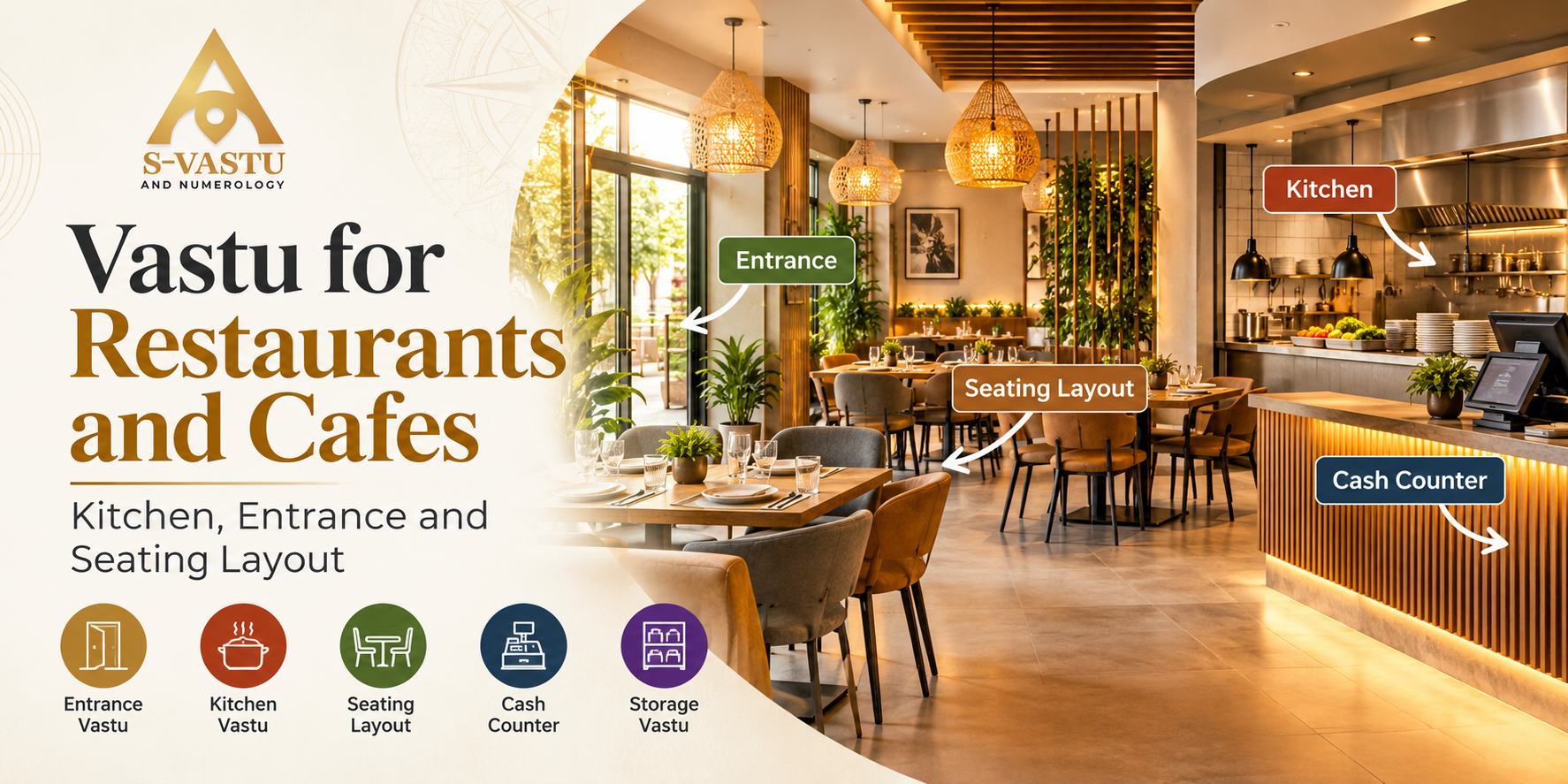
Explore Vastu for restaurants and cafes, including kitchen direction, entrance, seating and cash counter placement. Get expert guidance from S Vastu Solution.
Share this wisdom:
S
S-Vastu Solution
S-Vastu Solution provides expert Vastu consulting services for homes and businesses. We combine ancient architectural science with modern living to bring harmony, prosperity, and peace to your spaces.
Book a ConsultationSearch Blog
Categories
Recent Insights
Vastu Consultation
Balance the energies of your home or office. Connect with our experts today.
Book Now +91 98177 55699