
A home temple is more than just a place for daily prayers—it is the spiritual center of your home. According to Vastu Shastra, the location, direction, and design of your temple can significantly influence the flow of positive energy, peace, and prosperity in your living space.
Choosing the best place for a temple in your home as per Vastu helps create a harmonious environment where positive vibrations flourish. Whether you are building a new house or rearranging your existing prayer area, following Vastu principles can help you make the right decisions.
In this guide, we’ll explain the ideal temple location, the best directions, common mistakes to avoid, and practical Vastu tips for every type of home.
Why Is the Temple Location Important in Vastu?
According to Vastu Shastra, every direction in a home carries a unique type of energy. A temple placed in the correct location enhances spiritual growth, mental peace, and family harmony. It also helps create an atmosphere of positivity and mindfulness.
A properly placed temple is believed to:
Attract positive energy into the home
Promote peace and emotional well-being
Strengthen family relationships
Improve focus during prayers and meditation
Create a calm and sacred environment
Best Place for Temple in Home as per Vastu
The Northeast (Ishan Corner) is considered the most auspicious location for a home temple.
This direction is associated with divine energy and is believed to receive the maximum amount of positive cosmic vibrations. Placing your temple here creates a peaceful and spiritually uplifting atmosphere.
If the northeast corner is unavailable, you can also consider:
East direction
North direction
These directions are also favorable for worship and meditation.
Best Direction to Face While Praying
While offering prayers, your orientation also matters.
According to Vastu experts:
Face East while praying for spiritual growth and wisdom.
Facing North is also considered beneficial for prosperity and positive energy.
Avoid facing south while performing prayers whenever possible.
Ideal Position of the Temple
Besides selecting the right direction, the placement of the temple should also follow basic Vastu principles.
Some important guidelines include:
Keep the temple at a comfortable height.
Place idols on a raised platform.
Leave a small gap between the temple and the wall.
Ensure the prayer area remains neat and clutter-free.
Maintain good ventilation and natural lighting.
A clean and organized prayer space enhances positive energy and creates a peaceful environment for daily worship.
Can You Keep the Temple in the Living Room?
Yes.
For modern apartments and compact homes, placing the temple in the living room is acceptable, provided it is located in the northeast or east portion of the room.
Avoid placing the temple directly near entertainment units, televisions, or loudspeakers. The prayer space should remain calm and free from distractions.
Can the Temple Be in the Kitchen?
Keeping a temple in the kitchen is generally not recommended.
The kitchen is associated with fire energy, while the temple represents purity and spirituality. Mixing these two energies is considered unfavorable according to Vastu.
If there is no other option, ensure the temple is separated from the cooking area and never place it directly above or beside the stove.
Can the Temple Be in the Bedroom?
Ideally, the bedroom should not be used as a prayer room.
However, if space limitations make it unavoidable:
Keep the temple in the northeast corner of the bedroom.
Cover the temple with curtains after prayers.
Avoid placing idols directly opposite or facing the bed.
This helps maintain the sanctity of the prayer area.
Places Where You Should Never Keep a Temple
Vastu Shastra advises against placing a temple in certain locations because they may disrupt the flow of positive energy.
Avoid placing your temple:
Under a staircase
Inside bathrooms
Adjacent to toilets
Directly opposite a bathroom
Near shoe racks
Inside storage rooms
In dark or damp corners
Below overhead water tanks
These locations are considered unsuitable for a sacred space.
Which Idols Should Be Placed in the Temple?
The home temple should contain only those idols that inspire devotion and positivity.
Commonly worshipped deities include:
Lord Ganesha
Goddess Lakshmi
Lord Vishnu
Lord Shiva
Goddess Durga
Lord Krishna
Goddess Saraswati
Hanuman Ji
Avoid overcrowding the temple with too many idols. A simple and well-maintained temple is considered more auspicious than one filled with excessive decorations.
Vastu Tips for Home Temple
Follow these practical Vastu tips to maximize positive energy:
Keep the temple clean every day.
Light a diya during morning and evening prayers.
Use fresh flowers whenever possible.
Avoid broken idols or damaged photographs.
Store religious books neatly.
Use soothing colors like white, cream, or light yellow.
Keep incense and lamps safely arranged.
Ensure proper ventilation.
A well-maintained prayer space reflects positivity and devotion.
Best Colors for a Home Temple
Colors play an important role in creating a peaceful atmosphere.
According to Vastu, the best colors for a home temple include:
White
Light Yellow
Cream
Beige
Light Orange
Soft Gold
Avoid using dark shades such as black, dark gray, or deep red in the prayer area.
Common Vastu Mistakes to Avoid
Many homeowners unknowingly make mistakes while designing their prayer space.
Some common errors include:
Placing the temple under a staircase
Keeping broken idols
Facing south while praying
Placing the temple next to a bathroom
Allowing clutter around the prayer area
Installing oversized temples in small apartments
Keeping unused items inside the temple
Correcting these mistakes can help create a more peaceful and spiritually balanced environment.
Vastu Tips for Small Apartments
Modern homes often have limited space, but you can still follow Vastu principles.
Some useful ideas include:
Use a compact wooden temple.
Place it in the northeast corner of the living room.
Install wall-mounted mandirs if floor space is limited.
Keep the area clean and well-lit.
Avoid placing the temple directly above electrical appliances.
Even a small prayer corner can become a powerful source of positivity when designed thoughtfully.
Benefits of a Vastu-Compliant Temple
Following Vastu recommendations for your home temple may contribute to:
Greater peace of mind
Better concentration during prayers
A calm family environment
Positive energy throughout the home
A dedicated space for meditation and reflection
Enhanced spiritual connection
While these principles are rooted in traditional beliefs, many families also appreciate the sense of order, cleanliness, and mindfulness they encourage.
Conclusion
The best place for a temple in your home as per Vastu is the northeast direction, followed by the east or north. Choosing the right location, maintaining cleanliness, and avoiding common Vastu mistakes can help create a peaceful and spiritually uplifting atmosphere.
Whether you live in a spacious independent house or a compact apartment, thoughtful temple placement can transform a simple prayer corner into a sacred space that promotes positivity and harmony.
If you are planning a new home or wish to improve the energy of your existing space, consulting an experienced Vastu expert can help you align your home with traditional Vastu principles while meeting your practical needs.
Frequently Asked Questions (FAQs)
1. Which direction is best for a home temple according to Vastu?
The northeast (Ishan) direction is considered the most auspicious location for a home temple.
2. Can I keep a temple in the living room?
Yes. Place it in the northeast or east part of the living room while keeping the area peaceful and clutter-free.
3. Is it okay to keep a temple in the bedroom?
It is generally not recommended. If unavoidable, place it in the northeast corner and maintain the sanctity of the space.
4. Can a temple be placed under a staircase?
No. Vastu advises against placing a temple under a staircase.
5. Which direction should I face while praying?
Facing east is considered ideal, while north is also regarded as favorable.
6. What colors are best for a home temple?
White, cream, light yellow, beige, and soft gold are considered the most suitable colors for a peaceful prayer area.
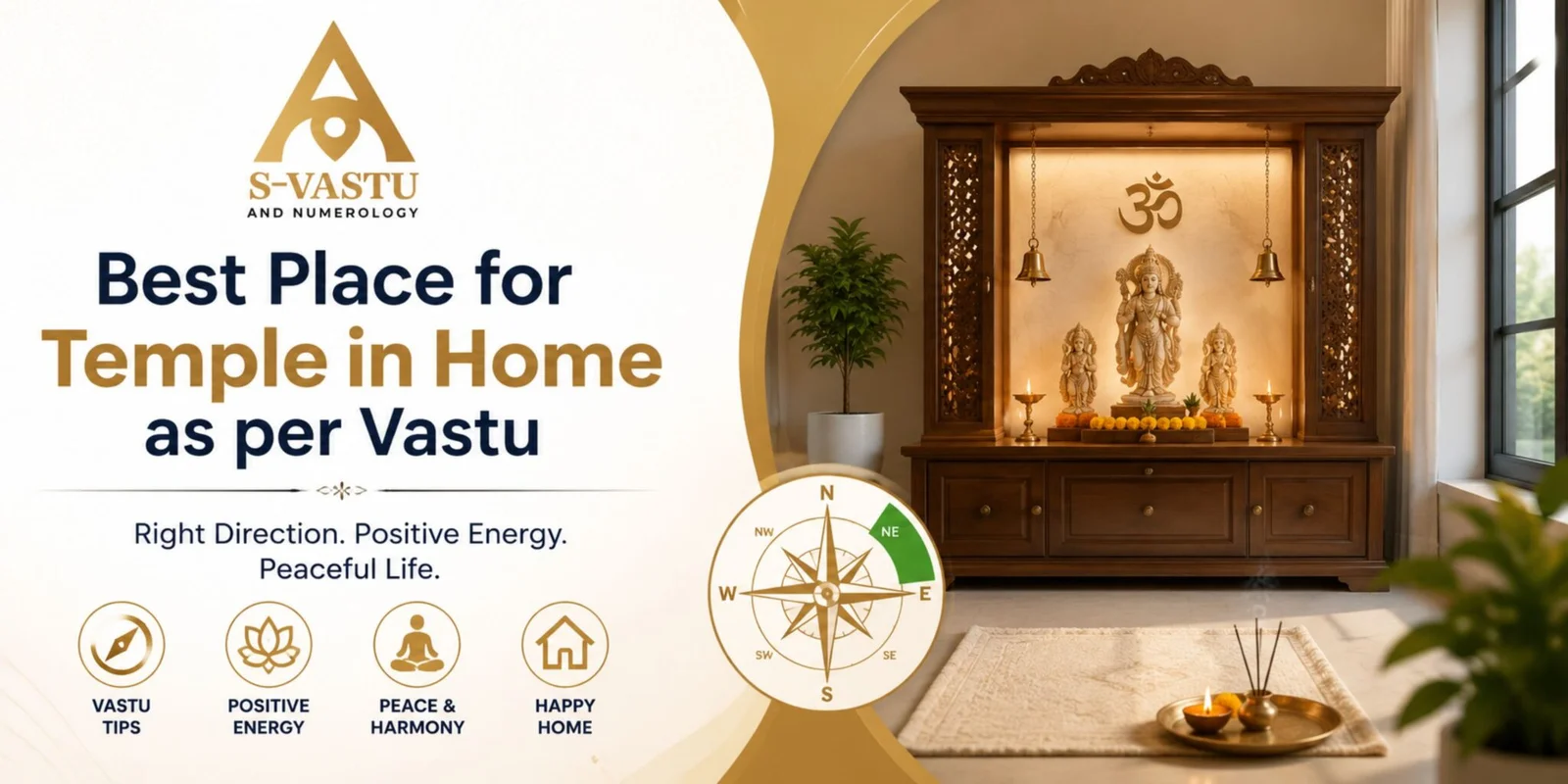
Discover the best place for a temple in your home as per Vastu. Learn the ideal direction, placement tips, common mistakes, and Vastu guidelines for a peaceful and positive home.
Share this wisdom:
S
S-Vastu Solution
S-Vastu Solution provides expert Vastu consulting services for homes and businesses. We combine ancient architectural science with modern living to bring harmony, prosperity, and peace to your spaces.
Book a ConsultationSearch Blog
Categories
Recent Insights


Vastu Consultation
Balance the energies of your home or office. Connect with our experts today.
Book Now +91 98177 55699